
“I’ve heard him conjure more beauty and expressiveness out of two stones clacked together than many composers can with a full orchestra.”
—Gavin Borchert, Seattle Weekly
Portfolio Highlights
jump to List of Works

Activist Songbook

The Ones, a.k.a. (Be)longing, a.k.a. Trigger

Stuck Elevator
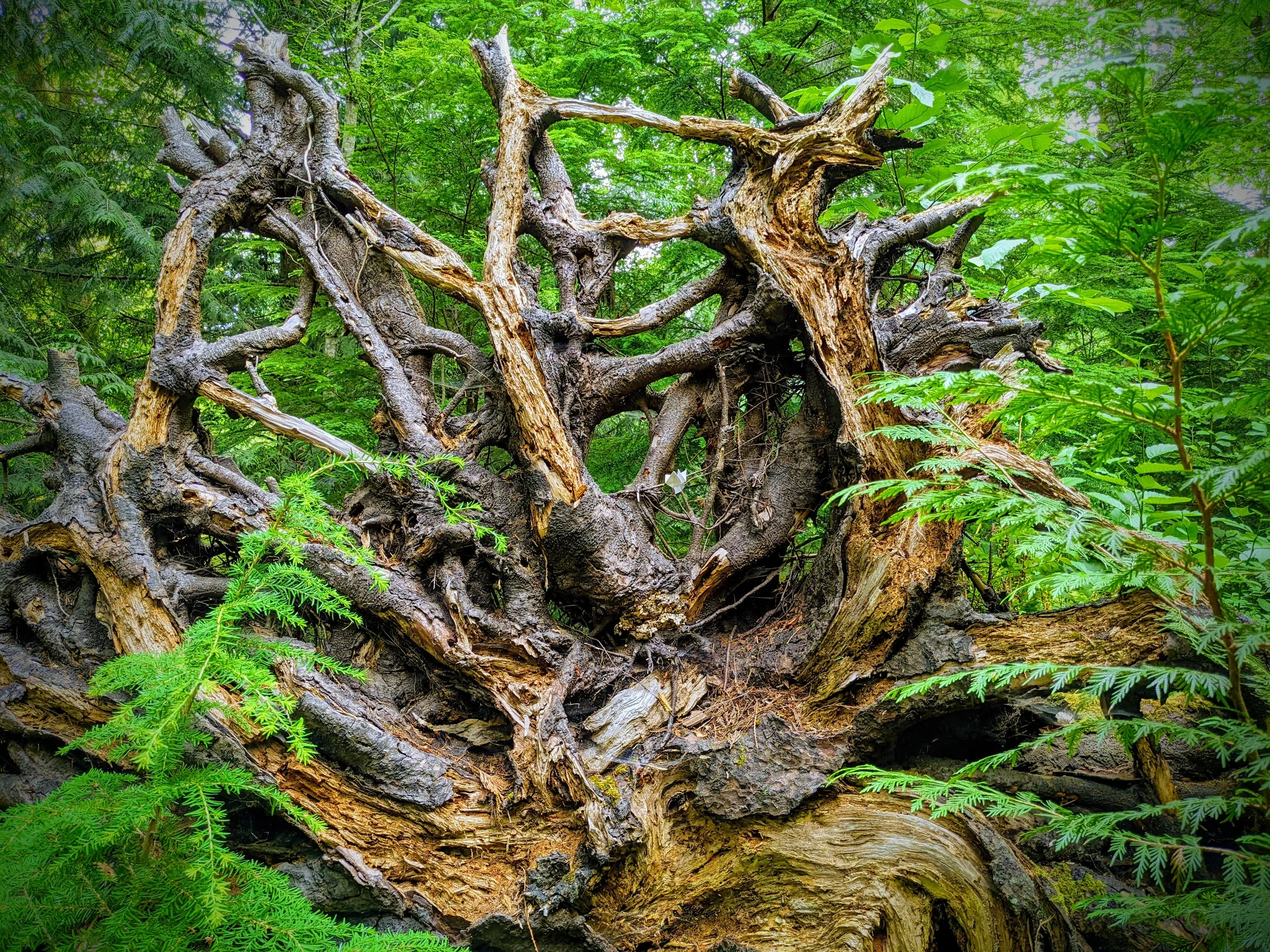
Forest Aeternam (in development)
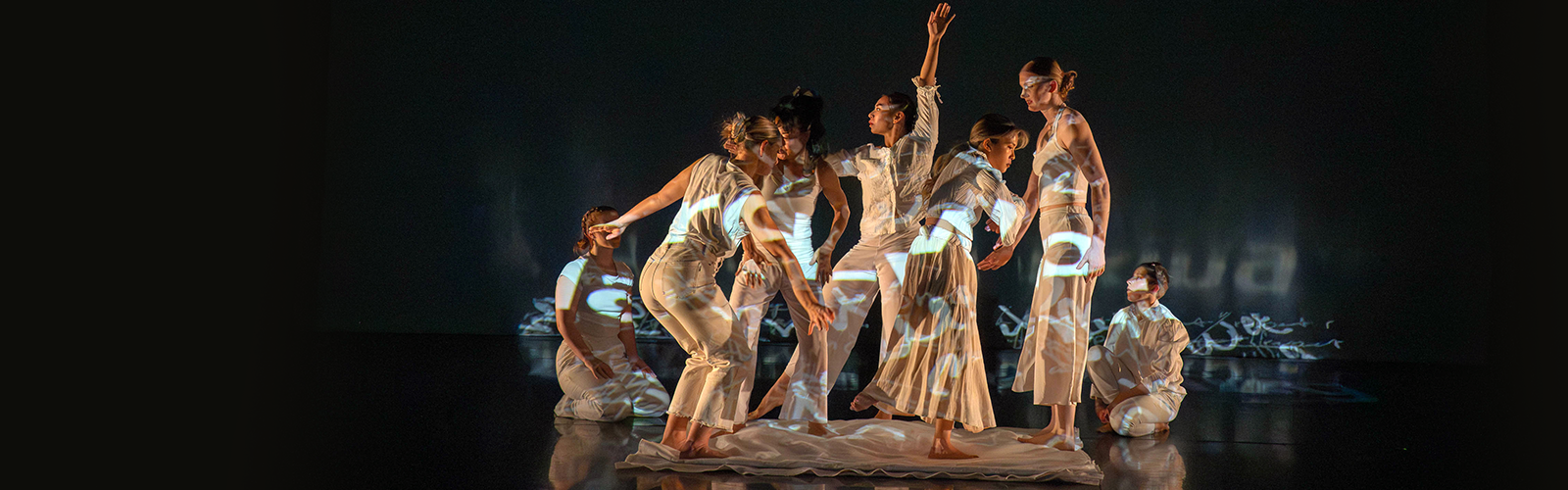
Dirty Laundry (Touring)
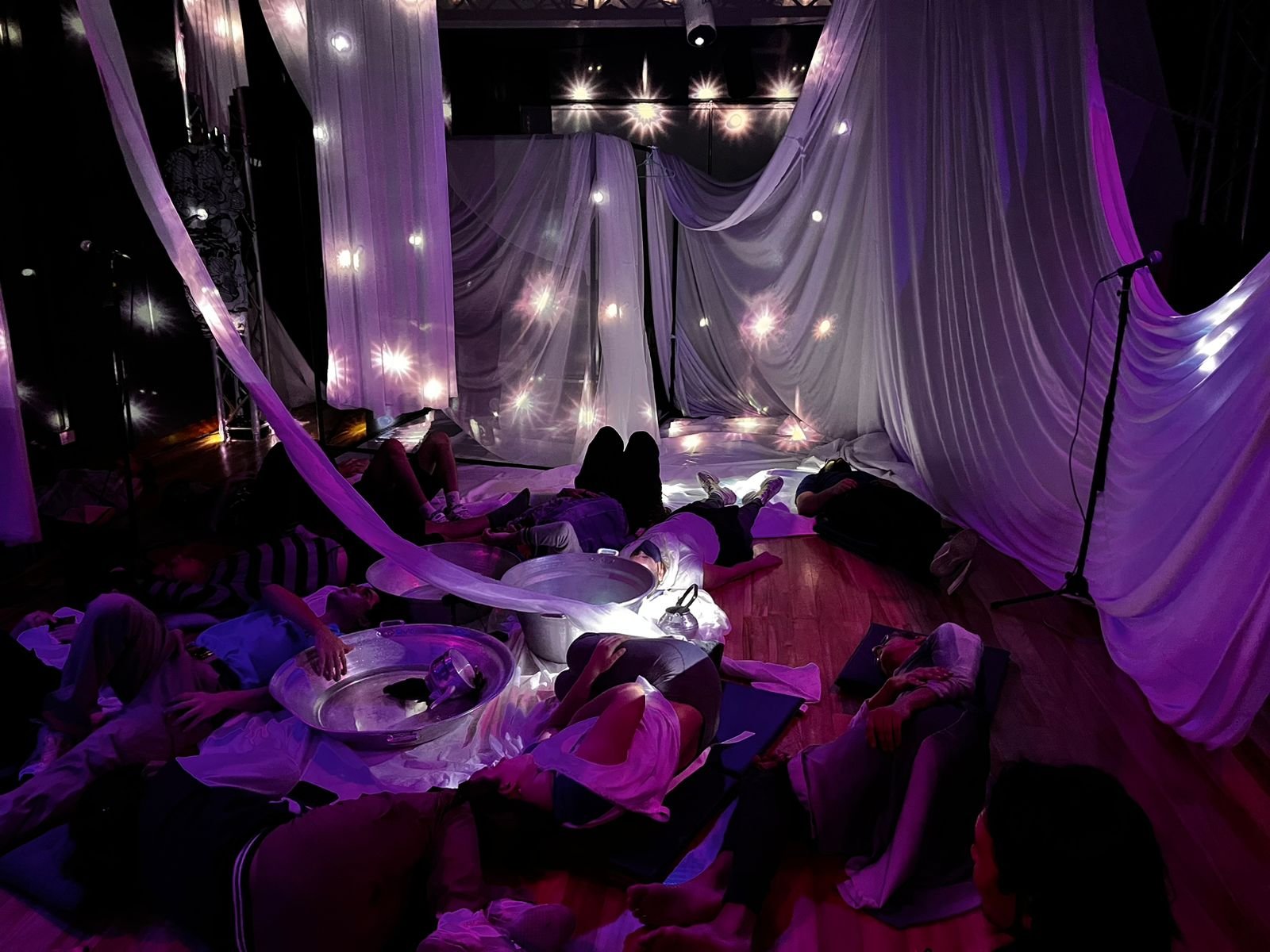
Oasis

The Truer History of the Chan Family

Turbine

The War of the Roses

Water Partitas

Music Opens

Piano Concerto—Houston

Mo Sheng 墨声 Ink Sound

Occupy Orchestra 無量園 Infinity Garden

趙氏孤兒 The Orphan of Zhao

Welladay! Welladay! Wayward Love Songs

Farewell: A Fantastical Contemplation on America’s Relationship with China
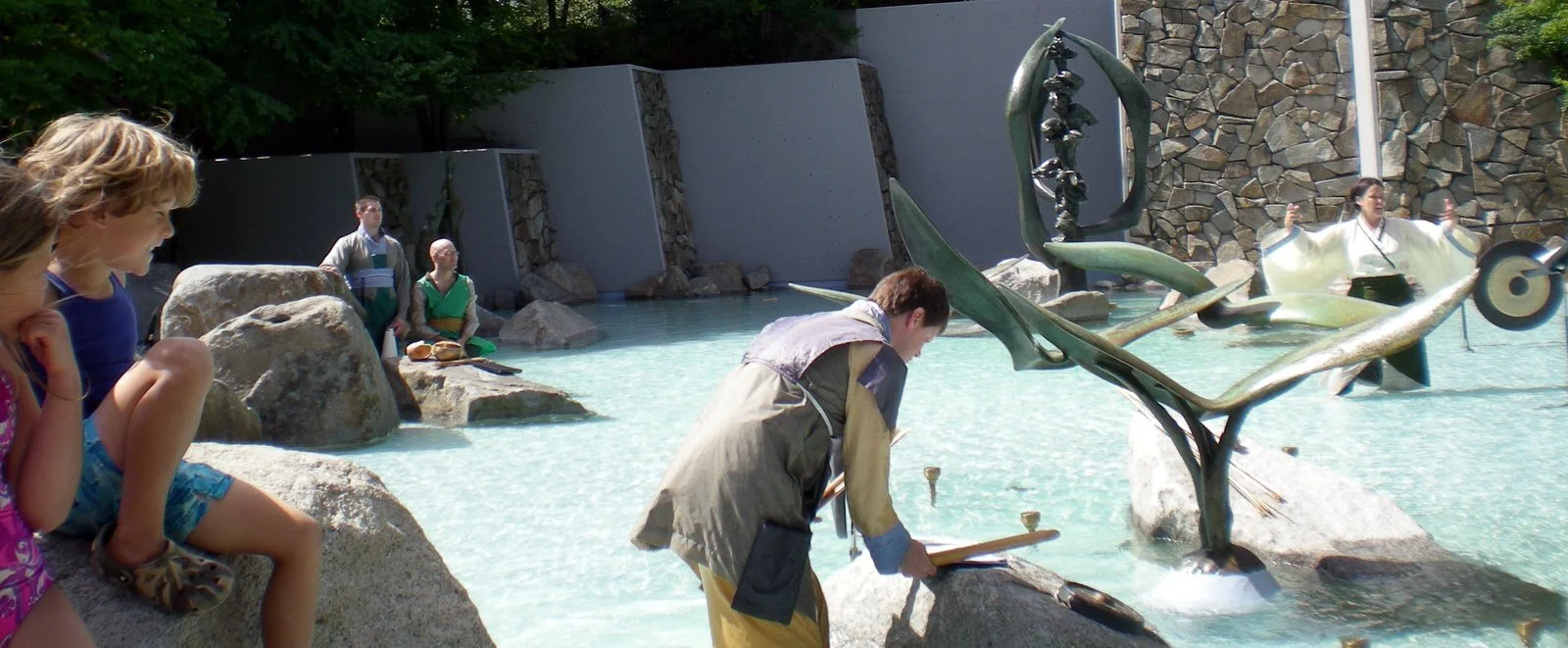
Kidnapping Water: Bottled Operas
List of Works
Chamber · Choral · Film/TV · Installation/Site-Specific · Dance · Opera/Orchestra/Theater · Percussion/Taiko · Piano · Recordings
Chamber
Ceremonial performances for chamber ensembles can be both epic and intimate. As a child, Au Yong learned to play the piano and violin. Today, he accompanyies instrumentalists and vocalists as a collaborative pianist. Asian aesthetics, graphic notation, and sonic explorations characterize how he actualizes chamber events.
“entirely new to me and I loved it immediately.”
—Rebecca Fischer, violinist
-
This suite in seven sections fragments various atmospheres from The Headlands, a play by Christopher Chen. The music is non-narrative and provides an overall impression of various states experienced in this San Francisco noir detective story. More than a recap of the theater production (as in an overture), the music can be considered a set of amplifications, clues, and memories. Premiered by Earplay at Old First Concerts.
duration 11 minutes
-
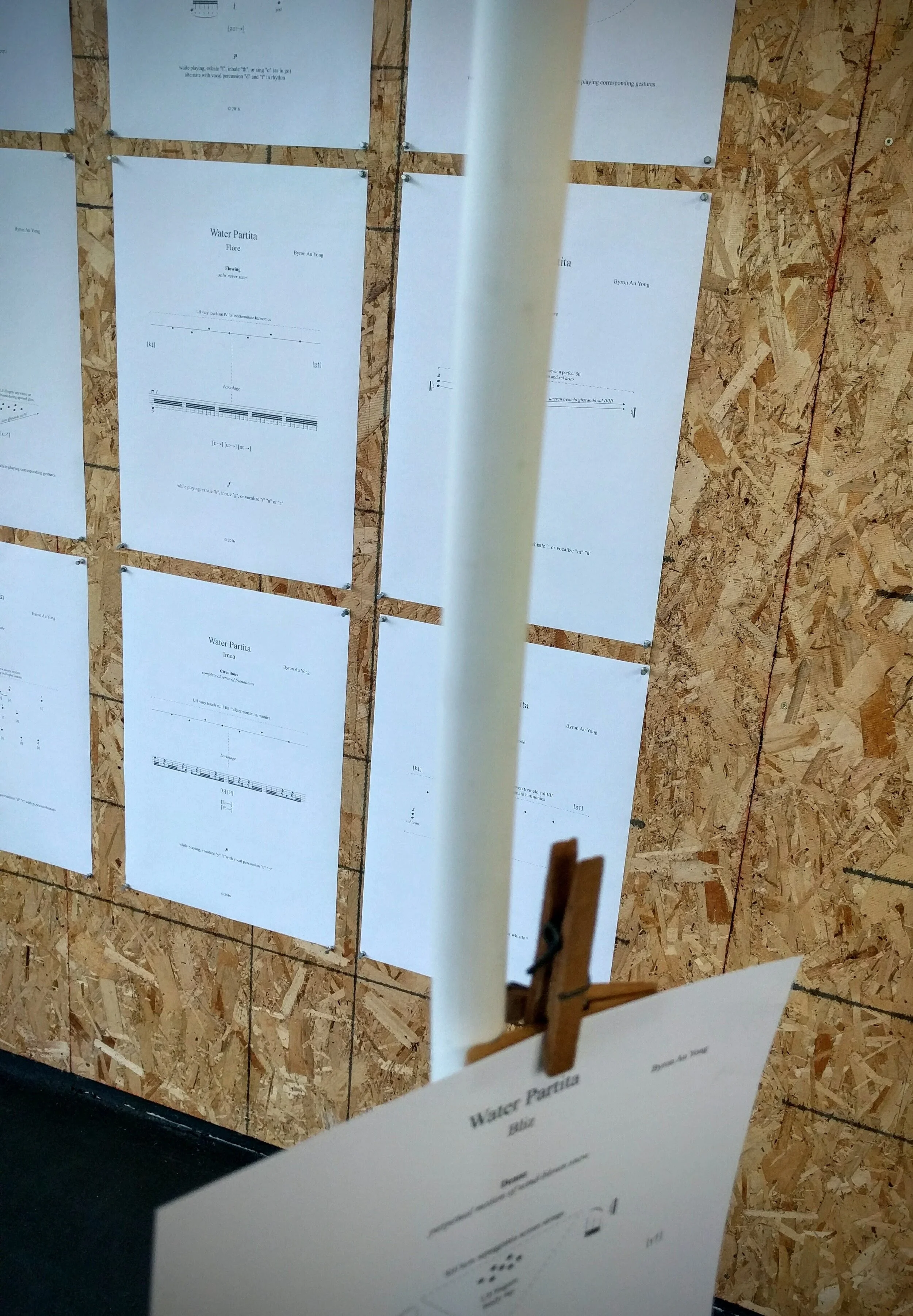
These partitas contain solo parts to be played in any order. Considering water in three basic states: liquid, solid and vapor, I include 54 ways water appears and disappears. Any number of string players can perform this work. Learn more
duration variable
-
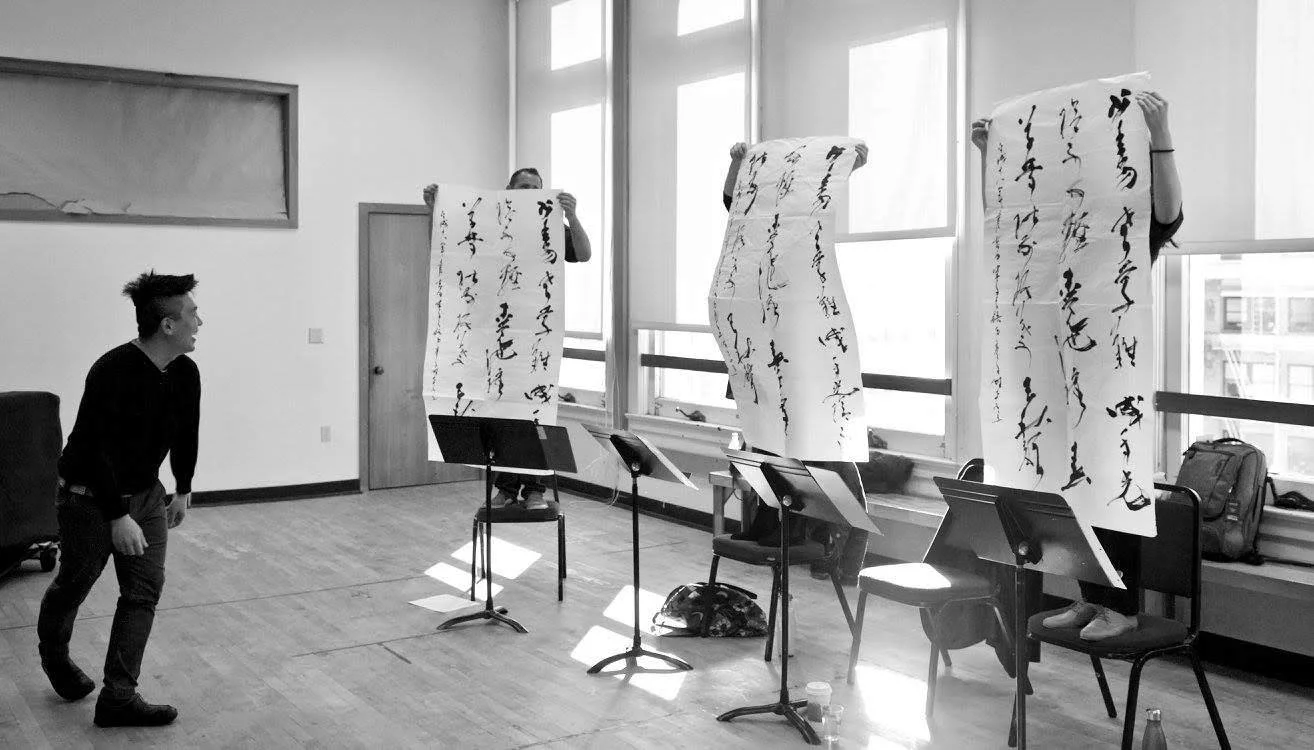
Inspired by 潘公凯 Pan Gongkai’s art, the music provides a template for realizing a calligraphic impulse; as brush stroke becomes painting, motion becomes sound. Commissioned by the Frye Art Museum. Learn more
duration 18 minutes
-
This piano trio is available to be revised and premiered.
duration variable
-
In 1914, Erik Satie composed 21 short piano interludes called Sports et Divertissements. Tangosa reimagines #17 Le Tango Perpétuel for string trio. Commissioned for and premiered at March Music Moderne IV, by musicians Hae-Jin Kim, Kenji Bunch, and Diane Chaplin, in Portland, Oregon.
duration 1 minute
-
Welladay! Welladay! Wayward Love Songs sweeps through 36 poems by James Joyce, published in the 1907 collection Chamber Music. Despite the exclamation points in the title, Welladay! is a quiet work. The intimate, variable music nods to love as well as the orphans and unwed mothers who lived in Seattle’s Good Shepherd Center from 1907 to 1973. Commissioned by Nonsequitor. Learn more
duration 1 hour
-
In this work for voice and Japanese instruments, a soprano chants a litany of Japanese vocal styles combined with outbursts from Mutsuo Takahashi’s realizations of sexual longing to reach a place that reflects my everyday existence caught between cultures. Forbidden Circles premiered at the Acros Theatre in Fukuoka, was performed by Ora-J at the International House of Japan in Tokyo, and won the Fukuoka Gendai Hogaku Festival Award.
duration 6 minutes
-
This work was premiered outside of a Confucian Temple at the Jeonju Sanjo Festival.
duration 8 minutes
-
This work was commissioned and performed by Loren Kiyoshi Dempster at the Nichiren Hokke Buddhist Church in San Francisco, California.
duration 8 minutes
-
This shakuhachi honkyoku was premiered by Christopher Yohmei Blasdel at the Atlantic Center for the Arts and recording on the CD Walking.
duration 11 minutes
-
This work was premiered at the Ernest Bloch Music Festival.
duration 17 minutes
-
This work was premiered by the Young Composers Collective in Seattle.
duration 8 minutes
-
This work was premiered at the University of Washington in Seattle and performed at the Hochschule für Musik und Theater in Hamburg, Germany. An excerpt appears on the recording China Exchange, release by New World Records.
duration 17 minutes
-
This work was performed by the Young Composer Collective at the OK Hotel in Seattle.
duration 5 minutes
-
This trio was performed at the University of Washington in Seattle.
duration 8 minutes
-
This solo was performed at the University of Washington in Seattle.
duration 9 minutes
-
This duo was performed by violinist Daniel Perry and the composer at the University of Washington in Seattle.
duration 12 minutes
Choral
Most of Au Yong’s performance works include voice. As a boy, he sang amongst the trees of the Pacific Northwest. Listening to nature and how people relate with the earth and each other informs how he create performances with voices.
“His writing for the voice is direct and visceral… relevant and revelatory.”
—Eric Banks, founding director of The Esoterics
-
Raps and songs to counteract hate and energize movements based on interviews of Asian Americans, Asian immigrants and Asian refugees. Presented at Asian Arts Initiative, International Festival of Arts & Ideas, and other locations. Learn more
duration variable
-
A setting of Tang Dynasty poetry inscribed on boxes of masks donated by Chinese foundations to other countries during the COVID-19 pandemic. Premiered by the Stanford Chamber Chorale, conducted by Stephen Sano.
duration variable
-
Choral work based on the quote: “Music acts like a magic key, to which the most tightly closed heart opens,” by Maria Augusta von Trapp. Premiered by ASUSF Voices at the University of San Francisco. Learn more
duration 4 minutes
-
Music Theater Forum about coming of age in an age of guns for local participants in a staged hip-hop oratorio. Commissioned by Center of the Arts at Virginia Tech and International Festival of Arts & Ideas, presented at MDC Live Arts, NYU New Studio on Broadway, and other locations. Learn more
duration 2 hours
-
Site-responsive performance for more than 80 singers outdoors along the water created for the 200th Anniversary of the Fairmount Water Works—an urban environmental center on the Schuylkill River in Philadelphia. Commissioned and premiered by Leah Stein Dance Company and Mendelssohn Club of Philadelphia. Learn more
duration 1 hour
-
Based on Verse 22 of the Dao De Jing (道德經) with lyrics in English and Mandarin, with the choir doing tai qi. Commissioned and premiered by The Esoterics, performed by Sacred and Profane a Chamber Chorus.
duration 6 minutes
-
Commissioned and premiered by The Esoterics
duration 11 minutes
-
Commissioned and premiered by The Estoterics
duration 7 minutes
-
Commissioned and premiered by The Esoterics
duration 5 minutes
Film and Television
As an only child of divorced, immigrant, working parents, the piano and television were his friends. Au Yong’s understanding of the media, includes ways to sonically portray character and mood.
“I was captivated by his unique sound, by the fusion of Chinese and Western musical elements in his music, and by his compassionate storytelling.”
—Carey Perloff, director
-
Original music for a vaudeville by playwright Eugenie Chan. Learn more
duration 1 hour
-
This experimental movie shows a chance meeting between lovers David and Jonathan, who are tragically separated, only to embark on a surreal journey. Directed by Mark Eby of Azeri Productions. Au Yong contributed music for this independent film.
duration 13 minutes
-
This documentary by PBS KCTS-Seattle producer Susan Han shows early childhood education in China to reveal how this nation of 1.2 billion people is preparing children for the future. Au Yong contributed music for this television special.
duration 1 hour
Installation
Site-Specific
Listening outdoors is part of his practice. Oftentimes, Au Yong traces the contours of a place to understand his location, as well as gather clues to the history of the place and possible futures. These embodied findings make their way into ceremonial events.
“Au Yong, a self-described site-responsive composer, with training in dance and theater, who had created a number of works for outdoor spaces.”
—Kelsey Menehan, Chorus America
-
A Mixed Reality Opera Immersive Ceremony co-created with Norah Zuniga Shaw as part of Livable Futures. Learn more
duration about an hour
-
An intimate installation of solo video portraits and an ensemble audio sculpture, created in collaboration with social sculptor Susie J. Lee and cinematographer Soyoung Shin. Learn more
duration 121 minutes
-
A live music-installation that combines displaced musicians, handmade paper, flashing lights, seismic waves, and a chaotic super moon in a magical experience. Co-created by Au Yong and director, conceptual, installation artist Roger Benington, O(pa)pera investigates ephemera and responds to earthquakes around the Pacific Rim, as well as financial meltdowns around the globe. The audience gathers around a gigantic paper tent for this musical performance. Commissioned by and premiered at the Seattle Art Museum Downtown.
duration 38 minutes
-
This series for hiking opera singers and water percussionists includes 64 musical miniatures with text from the Yijing 易經 (Book of Changes) reimagined by eight librettists. Kidnapping Water is available as live performances and a media installation. Learn more
duration variable
-
Ishquoh means the sound of waterfowl taking flight from Lushootseed, a Coast Salish language. In this site-responsive music-dance work, six children search for sounds in a ceremony alongside abandoned railroad tracks in Issaquah. Commissioned by 4Culture Site-Specific.
duration variable
-
The cassette tape recorder hisses and clicks. It channels the news. It plays at uneven speeds. Yet, perhaps because it is as old as I am, I find the patience to record water sounds and listen. Commissioned by the Society for Electro-Acoustic Music in the United States (SEAMUS).
duration variable
-
A multimedia environment with audio from eight speakers and video within four sculptures for galleries, museums, and other secure public spaces. Filmmaker Chishan Lin and media installation artist John D. Pai provide footage of my grandfather, China, and beyond. Landscape architect Lorraine Pai shapes a night-garden from electronic projections and wire mesh.
duration 43 minutes
-
Performance in the grand lobby of the Seattle Art Museum downtown.
duration 19 minutes
-
Performed at the Seattle Aquarium with funding from the Seattle Arts Commission
duration variable
Music for Dance
Movement sets into motion sound and sound helps move dance. As a performer maker Au Yong choreographs sound paying attention to content, location, performers, and audiences. Collaborating with dance makers provides ways to heighten performances.
“Byron Au Yong, delivers not just a score but a bedlam-filled sound collage.”
—Michael Upchurch, The Seattle Times
-
Music for a multimedia performance based on the collective gathering of true and often hidden stories of struggle and survival in connection with Asian American immigration, labor, culture, and identity, choreographed by Li Chaio-Ping with visual design by Hong Huo.
Duration circa one hour. Available to tour. Learn more.
-
Music for a dance-theater performance about contemporary Africa, choreographed by Donald Byrd and Spectrum Dance Theater, and performed at The Moore Theater.
duration 68 minutes
-
This performance, created as the second in a trilogy to stimulate discussions about a globalized, post-9/11 America, draws inspiration from the novel Beijing Coma (肉之土), by Ma Jian (馬建). Au Yong created live and pre-recorded music for this production choreographed by Donald Byrd and performed by Spectrum Dance Theater at The Moore Theater in Seattle. Learn more
duration 80 minutes
-
Original music by Au Yong replaces one of the seasons from Vivaldi’s Four Seasons in this dance performance choreographed by Olivier Wevers for Whim W’him. Premiered at On The Boards in Seattle, with version 2.0 for violin, soundtrack performed at Intimate Theater in 2011.
duration 39 minutes
-
Choreographed and performed by Archana Kumar and Ying Zhou for the Seattle Asian Art Museum with music performed live, then for the Bellevue Art Museum, with music recorded and modified electronically.
duration 11 minutes
-
Choreographed and performed by Archana Kumar and Ying Zhou
duration 15 minutes
-
Created and performed by the composer and choreographer Edisa Weeks
duration 8 minutes
-
Music for choreographer Marianne Kim
duration 6 minutes
-
Music for choreographer Mew Chang Tsing and film maker John D. Pai.
duration 9 minutes
Opera
Orchestra
Theater
Au Yong has been called a dramaturgical composer, because he focuses on character and story. From age 9 to 14, he performed in American musicals, then studied musical theater writing at age 30. In between, he was fascinated with the avant-garde. This explains his predilection to expand existing forms with surprising sonic twists.
“For opera and musical theatre enthusiasts, this was a rare artistic triumph.”
—George Heymont, The Huffington Post
-
Original music for this production was influenced by Viking aesthetics as in my research Shakespeare was influenced by Old Norse culture and performed at Cal Shakes. Learn more
duration 4 hours
-
Songs for a play by Eugenie Chan. Music includes a Brothel Song, Counting Song, Crocheting Songs, and a Spinning Song performed by the cast and er-hu musician Alan Yip at Exit Theater and the Donaldina Cameron House in San Francisco.
duration variable
-
Original Music and Music Direction for a classic Chinese play about revenge and sacrifice with three ensemble numbers and six vocal solos, as well as numerous musical transitions for the 25 scenes. Performed at the American Conservatory Theater and La Jolla Playhouse. Learn more
duration 2 hours
-
Chamber Opera and Music Theater hybrid prompted by the real-life experience of an undocumented Chinese food deliveryman trapped in a Bronx elevator for 81 hours. Learn more
duration 81 minutes
-
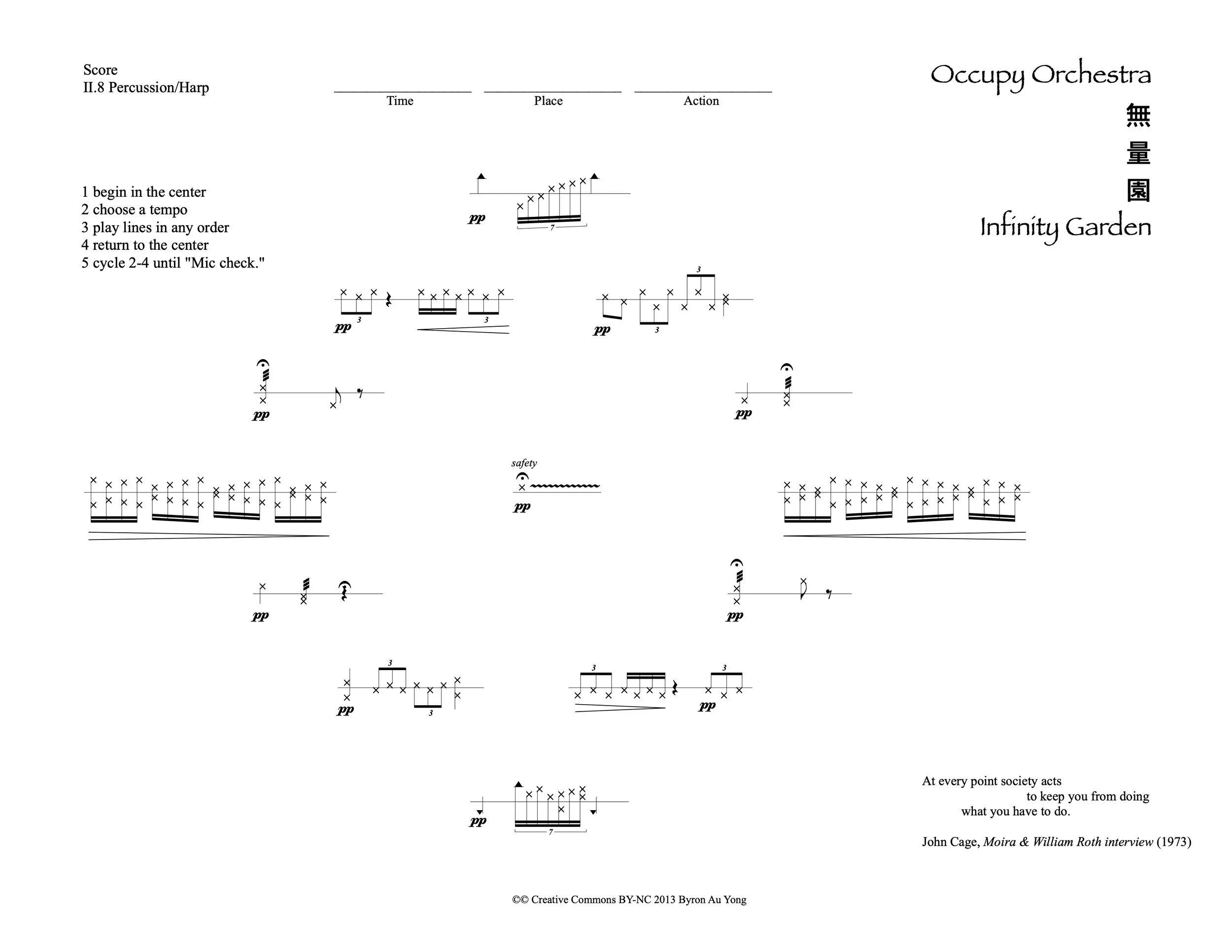
An aleatoric symphonic work inspired by classical Chinese gardens, John Cage and the occupy movement. Commissioned and premiered by the Chicago Composers Orchestra. Learn more
duration variable
-
Based on Oscar Wilde’s De Profundis. Created and performed by the composer with writer Frederick Sauter and techie Timothy McNearny at Dixon Place for the HOT! Festival in New York.
duration 19 minutes
-
Created with writer Aaron Jafferis and choreographer Erica Rebollar for the Ism Festival and performed at the NYU’s Kimmel Center in New York.
duration 12 minutes
-
Created as part of the Ford Foundation’s International Artists Program and performed at the historic Nippon Kan Theater in Seattle.
duration 58 minutes
-
Solo premiered by the composer at the Northwest Asian American Theatre in Seattle.
duration 15 minutes
-
Performed as part of Fresh Tracks at the David Henry Hwang Theater in Los Angeles.
duration 11 minutes
-
Original music for the play by Eugenie Chan, performed at the Northwest Asian American Theater in Seattle.
duration 22 minutes
Percussion
Taiko
Au Yong is considered one of the first trained composers who played professionally as a taiko artist. He has worked with taiko performers in Japan and North America, such as Kaho Tosha (Forbidden Circles), On Ensemble (Dust and Sand), and Portland Taiko (Rhythms of Change). He served as a consultant for TAIKOPROJECT, as well as workshop leader for North American Taiko Conferences and Regional Taiko Gatherings in Los Angeles, Portland, Seattle, Stanford, and online.
“… provided us with the much-needed encouragement, reflection, and thoughtfulness.”
—Michelle Fujii, Unit Souzou
-
North American Taiko Conference
Taught Producing Socially-Engaged Creative Work, Taiko Community Alliance (2021)
Taught Seven Ways to Develop Material, Stanford (2011)
Taught Seven Ways to Develop New Material, Los Angeles (2009)Regional Taiko Gathering
Led Composition Track, Portland (2012)
Taught Chinese Drumming Patterns, Seattle (2010)
Taught Composing for Taiko, Portland (2006)
Co-coordinated the Pacific Northwest conference, Seattle (1998)Portland Taiko
Composed Fifteen, for violin and taiko (2010)
Composer/Consultant for Rhythms of Change CD (2009)
Composer-in-Residence (2007)
Consultant for touring show The Way Home (2007)
Composed News, for paper, bamboo and taiko (2007)
Composed Ji Mo 寂寞: The Stillness of Solitude, for quartet (2007)Seattle Betsuin
Co-composed Seattle Omoide Ondo (2007)On Ensemble
Composed After-Effect, for taiko and turntable (2005)
Two by Four released on Dust and Sand CD (2005)
Composed Two by Four, for nagauta voice, taiko and gongs (2003)
Composed Crazy Eights, for taiko ensemble (2003)TAIKOPROJECT
Co-composed Home, for taiko ensemble, with Michelle Fujii (2003)
Music Consultant for (re)generation (2002-2003)Uzume Taiko Ensemble
Performances in Canada (1999)
Performed at Taiko Jam in Los Angeles (1999)
Performed at Vancouver Folk Music Festival (1999)
Performed at Vancouver Playhouse (1999)
Managed Belgium Tour (1999)Seattle Kokon Taiko
Performances in Oregon, Washington (1996-1998)
Performed at Taiko Jam in Los Angeles (1997)Okinawan Taiko
Studied with Wataru Shinjo (1995-96)Northwest Taiko
Performed in Montana, Oregon, Washington (1993-1996)Media & Writing
Au Yong, Byron. Imagining a Future for Taiko. September 2012.
Au Yong, Byron and Chad Williams. New Music for Taiko. Video, August 2011.
Au Yong, Byron. The Eight Biennial North American Taiko Conference. NewMusicBox, August 2011. -
Commissioned and performed by Portland Taiko.
duration 8 minutes
-
Commissioned and performed by the composer, Karen Sakata Akada, Michelle Fujii, and Toru Watanabe, for Portland Taiko.
duration 19 minutes
-
News, for bamboo, paper, taiko (2007)
Commissioned and performed by Portland Taiko.duration 6 minutes
-
Performed at the Seattle Asian Art Museum and other locations, part of 4Culture’s Touring Arts Roster.
duration variable
-
Performed by the composer in Xian, China.
duration 6 minutes
-
After-Effect, for turntable, snare, taiko (2006)
Commissioned and performed by On Ensemble.duration 6 minutes
-
Performed by the composer at Electric Island on Bainbridge Island WA.
duration 8 minutes
-
Co-created with Michelle Fujii and performed by TAIKOPROJECT and Portland Taiko.
duration variable
-
Commissioned and performed by On Ensemble at Grand Performances, then released on the recoding Dust and Sand.
duration 6 minutes
-
Commissioned and performed by On Ensemble at Stanford University.
duration 8 minutes
-
Performed at the Soundbridge Seattle Symphony Music Discovery Center and Electric Lodge in Los Angeles.
duration 6 minutes
-
Performed by the composer at SIL2K at the Weathered Wall in Seattle.
duration 17 minutes
-
Performed by Seattle Kokon Taiko at A-Fest in Seattle.
duration 5 minutes
-
Performed at the Seattle Composers Salon.
duration 5 minutes
Piano
The piano was Au Yong’s first love. As a child, he played for hours, alternating between the black and white keys. While this instrument easily produces sound, beware. Once the piano dictates the work being composed, then the imagination is lost.
“He first worshipped Bach and Chopin, but gradually switched—from piano to percussion, from reverence to questioning and from one cultural source to a melange.”
—Jen Graves, The News Tribune
-
This ongoing collection includes a solo piano work composed on every Memorial Day from 1991 to the present.
duration variable
-
An intimate installation of solo video portraits and an ensemble audio sculpture, created in collaboration with social sculptor Susie J. Lee and cinematographer Soyoung Shin. Learn more
duration 121 minutes
-
A work for two pianos, refers to Angel Island, where Chinese sojourners carved their poetry into the walls of the immigration barracks. These migrations, variations in the classical music sense, vary at each performance with a graphic notation score where melodies and chords float around the page. Commissioned by East-West Piano Arts and premiered at the University of Washington in Seattle. Performed Westminster Choir College in Princeton in 2016.
duration 11 minutes
Recordings

Piano Concerto–Houston, Bay Records, 2014
![YIJU 移居, Present Sounds Records [PS 1201], 2012](https://images.squarespace-cdn.com/content/v1/5ebc8ac4b9baca5e7206193f/1593374978595-MCVDT3H3DSWBS48XVHHB/YIJU+CD.jpg)
YIJU 移居, Present Sounds Records [PS 1201], 2012
![Kidnapping Water: Bottled Operas, Bay Records [BAY008], 2009](https://images.squarespace-cdn.com/content/v1/5ebc8ac4b9baca5e7206193f/1593375285424-34T7XILC7O4F8V101NFD/Kidnapping+Water+Bottled+Operas+CD.jpg)
Kidnapping Water: Bottled Operas, Bay Records [BAY008], 2009

Rhythms of Change, Portland Taiko, 2009
![BreathPlay, Bay Records [BAY007], 2007](https://images.squarespace-cdn.com/content/v1/5ebc8ac4b9baca5e7206193f/1593375401105-3Z73BLZ6LR6TOEKHY4Q5/breathplay2007.jpg)
BreathPlay, Bay Records [BAY007], 2007
![Dust and Sand, Ōn Ensemble [21097], 2005](https://images.squarespace-cdn.com/content/v1/5ebc8ac4b9baca5e7206193f/1593375455283-V82TCMTX35HV0C28WJTX/On+Ensemble+Dust+and+Sand.jpg)
Dust and Sand, Ōn Ensemble [21097], 2005
![Walking, Periplum Records [P0080], 2001](https://images.squarespace-cdn.com/content/v1/5ebc8ac4b9baca5e7206193f/1593375473688-KN8CY9IXCVNNTDJR9A7O/Walking.jpg)
Walking, Periplum Records [P0080], 2001

Itadakimasu! Karakarakara Records, 1999

A Bridge Home: Music in the Lives of Asian Pacific Americans, Wing Luke Museum, 1997
![eXchange: China, CRI/New World Records [NWCR805], 1999](https://images.squarespace-cdn.com/content/v1/5ebc8ac4b9baca5e7206193f/1593378349621-2W8DLT9E5JY24VO8WFLN/eXchange+China.jpg)
eXchange: China, CRI/New World Records [NWCR805], 1999
In Development
-
Forest Aeternam
where people listen and sing with the trees

-
Port City
an opera with text by Christopher Chen and Gen AI
Reframing
Byron Au Yong expands performance offerings through a postmodernist lens that embraces eclecticism inspired by nature, fosters meaningful relationships with participants, and restructures hierarchies by flipping the traditional performance triangle.
Examples include:
-
![Kidnapping Water: Bottled Operas]()
Kidnapping Water: Bottled Operas
64 site-responsive miniatures for hiking singers and percussionists
-
![Mo Sheng 墨声 Ink Sound]()
Mo Sheng 墨声 Ink Sound
an installation string quartet.
-
![Occupy Orchestra 無量園 Infinity Garden]()
Occupy Orchestra 無量園 Infinity Garden
Chinese gardens, John Cage, and Occupy Wall Street
-
![Piano Concerto–Houston]()
Piano Concerto–Houston
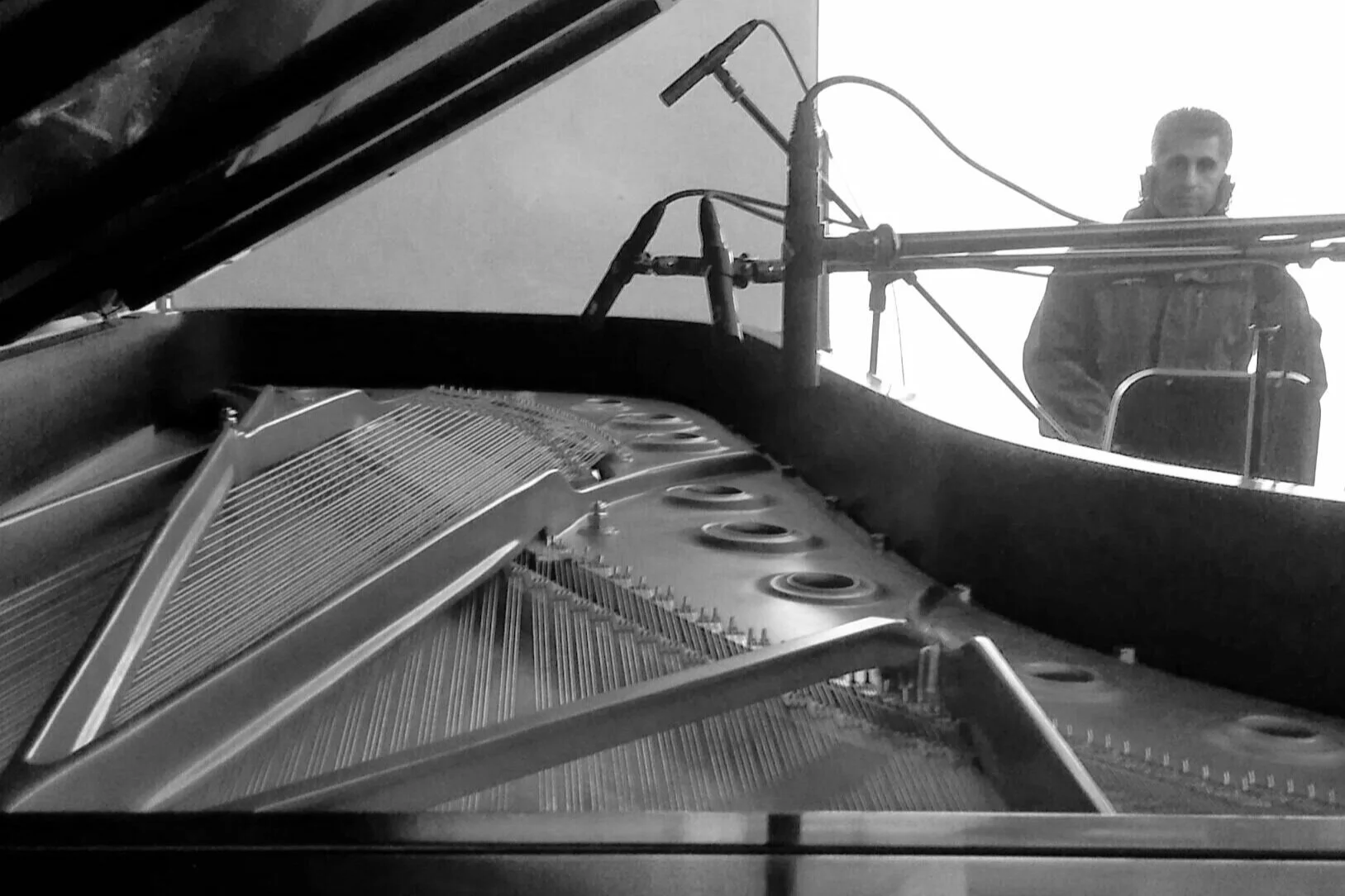
a multimedia exhibition for 11 pianists
-
![Water Partitas]()
Water Partitas
ceremonies for solo string instruments

Trilogy
This set of dramatic works explores:
1. What Americans fear.
2. Liberation from oppression.
3. Asian men who receive media attention.
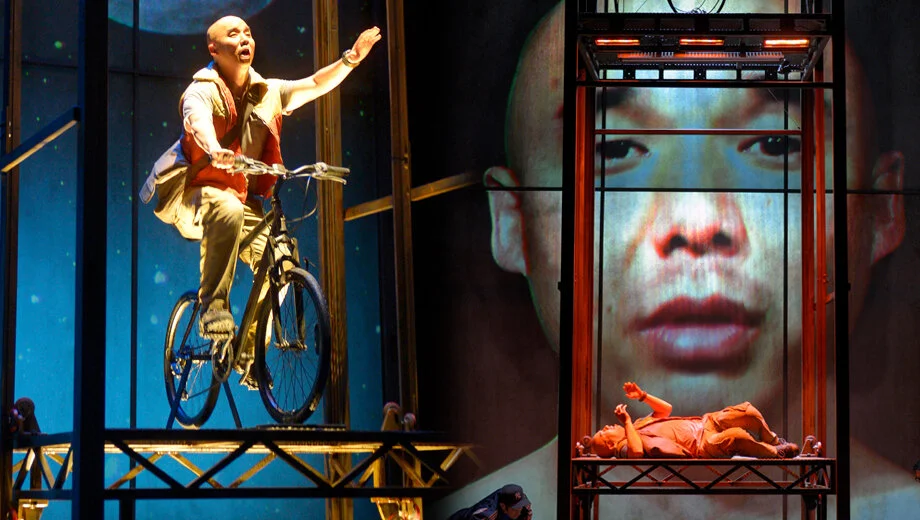
Stuck Elevator
a comic-rap-scrap-metal-opera about a trapped man in America
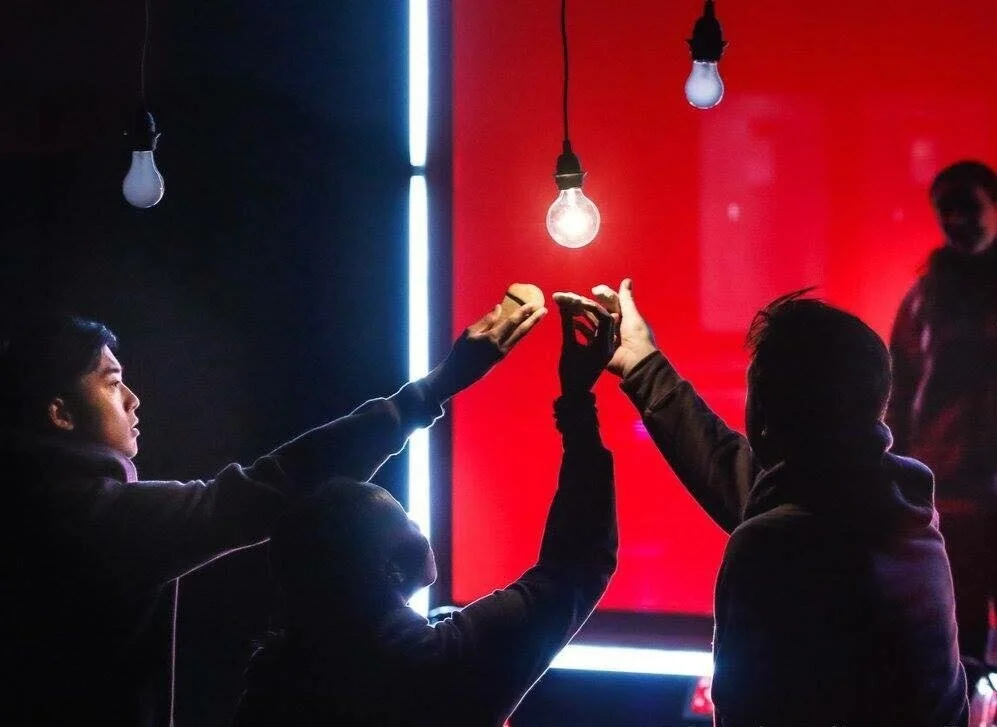
The Ones, a.k.a. (Be)longing, a.k.a. Trigger
a music theater forum about coming of age in an age of guns
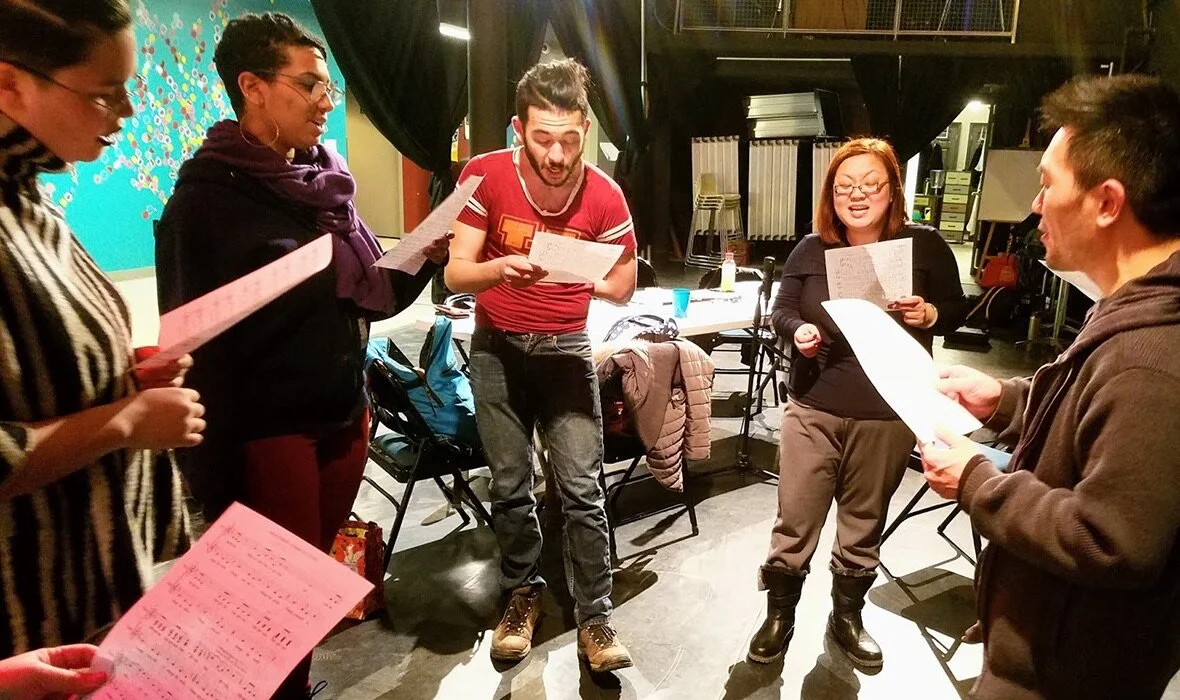
an ongoing collection to counteract hate and energize movements
Activist Songbook